Learn palmistry online: hand types, mounts and lines, the Hasta Samudrika way
RishiSetu’s palmistry programme teaches Hasta Samudrika Shastra in four courses, Basic, Intermediate, Advanced and Professional, 16 levels in all. It starts with hand types, the mounts and the major lines, goes on to minor lines, marks and timing, and ends with full readings of both hands. Health is taught as tendencies, never as a diagnosis, and nothing is promised about the future. Lessons take a few minutes and are in 10 languages.
- 4 courses · 16 levels
- 10 languages
- Both hands read
- No diagnosis, no fear
- Life line
- Head line
- Heart line
- Fate line
What are the four palmistry courses?
Basic, Intermediate, Advanced and Professional, each with its own certificate. They open in order, one exam at a time.
- 1Basic
Hasta Shishyaहस्त शिष्य
3 levels
Hand types, mounts, major lines, fingers and thumb.
- 2Intermediate
Hasta Sadhakaहस्त साधक
4 levels
Minor lines, marks, timing and both hands.
- 3Advanced
Hasta Vidvanहस्त विद्वान
5 levels
Beyond the hand: character and profession, health tendencies, the palm with the chart, the texts.
- 4Professional
Hasta Acharyaहस्त आचार्य
4 levels
Ethics, a full reading, case studies, practice consultations.
Every level ends with a mastery check and every course ends with an exam. Passing the exam earns the course’s certificate and opens the next course.
Which Samudrika courses are in the app?
The app teaches Samudrika in two parts: the hand, on this page, and the face and body. Each has four courses from Basic to Professional, with its own certificates. Start with either.
4 courses · 16 levels
The hand: Hasta Samudrika
Hand types, mounts and lines, then timing on the hand, through to full readings of both hands.
- Hasta Shishya
- Hasta Sadhaka
- Hasta Vidvan
- Hasta Acharya
4 courses · 22 levels
The face and body: Samudrika Shastra
Build, proportion and lustre, then the head and face part by part, voice and gait, the limbs and marks, through to full readings.
- Samudrika Shishya
- Samudrika Sadhaka
- Samudrika Vidvan
- Samudrika Acharya
What is Hasta Samudrika Shastra?
Hasta Samudrika Shastra is the Indian tradition of reading the hand. It is part of the wider Samudrika Shastra, which also reads marks on the face and body.
A reading looks at the shape of the hand, the fingers and thumb, the mounts at the base of the fingers and palm, and the lines. Indian palmistry names the mounts after the grahas, which links it to Jyotish.
The course also teaches Cheiro, the well-known palmist of the early twentieth century, and labels which tradition each rule comes from.
How does RishiSetu teach palmistry?
- Each rule names its tradition: Samudrika Shastra, Cheiro, or a later practice.
- Health is taught as tendencies to notice, never as a diagnosis.
- Timing on the lines is taught as the texts give it, not as a promise.
- Every level ends with a mastery check, and every course with an exam that opens the next.
- Reading the palm with the birth chart, in the Advanced course, opens once you hold the Basic Astrology certificate.
Try a lesson from the Basic course
Each lesson has a short preview here; the full lesson, with its diagrams and practice, opens in the app.
Palmistry
Who is this subject traced to?
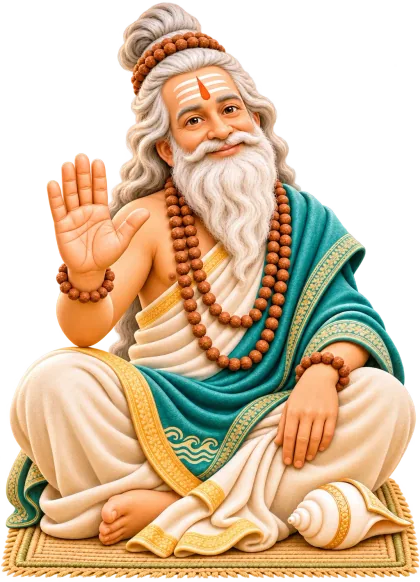
Samudra Rishi
The name behind Samudrika Shastra, the reading of the body and the hand.
Guruji, your guide
Questions people ask before they start
Inside the app, you can ask Guruji about any lesson, in your own language.
Can I learn palmistry online in Hindi?
Yes. RishiSetu teaches palmistry (Hasta Samudrika) online from zero, in short lessons in 10 languages including Hindi and English, and you can switch language at any time without losing your progress.
What do you learn first in palmistry?
Hand types, the mounts and the major lines. Minor lines, marks and timing come next, and full readings of both hands come last.
Do I need to know astrology to learn palmistry?
No. The palmistry courses start from zero. One Advanced level, which reads the palm together with the birth chart, also needs the Basic Astrology certificate.
Which hand is read in palmistry?
Both. Traditions differ on what each hand shows, so the course reads the two together and says where teachers disagree.
Can palmistry tell my future?
RishiSetu teaches what the tradition says about the hand, not promises. Timing on the lines and health are taught as the texts describe them, never as a certain outcome or a diagnosis.
Is it Hasta Samudrika or Samudrika Shastra?
Samudrika Shastra is the whole Indian tradition of reading marks on the body and face; Hasta Samudrika is its part about the hand. RishiSetu teaches both, as two separate sets of courses: these for the hand, and another for the face and body.
Your first lesson takes about five minutes
Sign in with your email, choose your language, and start at the beginning. RishiSetu keeps your place.